


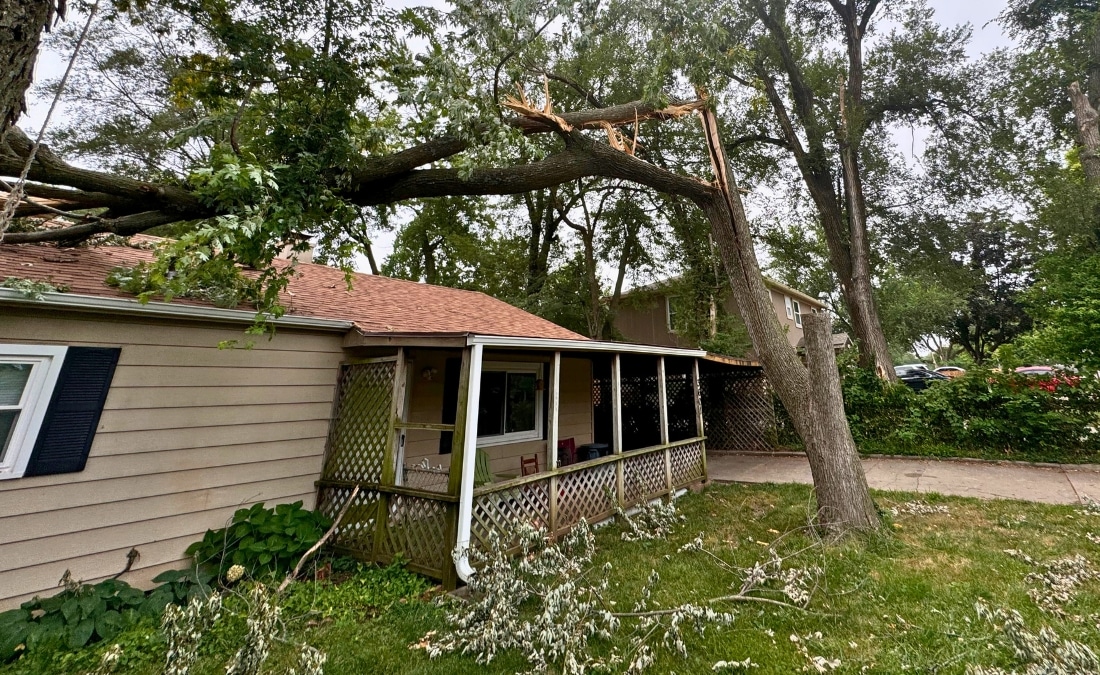
The Hidden Damage: What to Inspect After a Storm
The debris in your yard is the easy part. Branches, shingles on the lawn, a dented mailbox you can see all of that from your driveway. It’s the damage you can’t see that costs you the most.
We’ve walked hundreds of roofs after storms. And almost every time, the homeowner is surprised by what we find.
As a storm damage restoration contractor, we see this pattern constantly: a roof that looks fine from the ground is quietly falling apart up close. So here’s what we actually look for the stuff most people miss until it’s too late.
Start with hail. Everyone assumes hail damage means a cracked window or a dented car hood. The bigger problem is what it does to your shingles.
Check your gutters. If you see a buildup of sand-like granules, that’s not dirt; that’s your shingle mat losing its protective coating. From the attic, gently press against the roof deck. Soft or spongy spots mean the shingles have been bruised, and bruised shingles stop keeping water out.
Look at your metal, too. Vents, flashing, chimney caps. Dents there are a dead giveaway that the roof took a hit, even if the shingles up top look untouched.
This is exactly the kind of thing that turns into a hail damage roof repair near me search three months later, once a small leak becomes a big one.
Wind works differently. A missing shingle is obvious. What’s not obvious is flashing that got lifted a quarter-inch and never tore off, just enough to open a path for water. Or a seal between shingles that wind-driven debris loosened, so it fails the next time it storms.
Our wind damage home repair services exist because of that second category. The stuff that doesn’t show up until the next heavy rain, when it’s already inside your ceiling.
And it’s not just the roof. Wind and hail hit siding, too cracks, dents, small holes that let water into the wall cavity behind them. Window screens tear. Frames get chipped, and a chip today is rust or cracking six months from now.
Here’s the part nobody enjoys thinking about, but it matters more than anything else on this list: your insurance company won’t pay for damage it can’t see documented.
We had a client last spring with hail the size of golf balls, a policy that should have covered a full roof replacement. But the original inspection only caught the obvious stuff. No photos of the granule loss, no mention of the soft spots. The initial payout barely covered a patch job.
That’s the gap we close. As an insurance claim assistance contractor, we document everything photos, measurements, a written scope that matches exactly what an adjuster is trained to look for. We’ll even walk the roof with your adjuster ourselves, so there’s no argument about what’s real and what isn’t.
Storms are unpredictable. What happens next doesn’t have to be.
If you’ve had severe weather roll through recently, don’t wait for a leak to tell you something’s wrong. By then, the damage and the cost have already grown. A close look now is a lot cheaper than a surprise later.